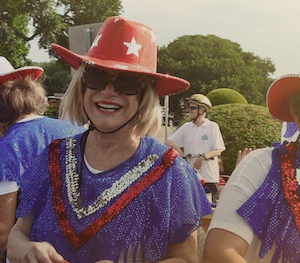
By Vivian Mitchell, 2024 Dole Caregiver Fellow, Colorado
I am punished because I speak my Native tongue. Now you tell me to speak it in battle, I do and with honor. I speak circles with my Talker Brothers. All are confused and scared when they hear my voice. No one knows of me or who I am. I am America’s secret weapon. My messages are translated with speed and accuracy. The battle changes course because of me. My Country puts me away and forgets me. After 25 years or so, I am awakened and now I am honored.
Navajo Code Talker
USMC Robert Walley Sr.
Growing up, I was taught to be respectful of our veterans. “You honor them. You listen to them. You give them your respect. They are our warriors. They protect us.” Those lessons were given to me early, and they have stayed with me. Native Americans serve in the Armed Forces at the highest rate per capita. Why? To protect our Motherland. To uphold respect and honor. Our people have served in every conflict this country has ever fought, and they have done so with pride.
Our grandmothers, our elders, and the keepers of our history remind us that we are the five-fingered beings—human beings who bleed red. We are taught to treat each other with respect because every person has a heart. Each of us belongs to someone, and each of us is someone: a child, a sibling, a grandchild, an aunt or uncle, a father and a mother. We were chosen to be here, and we are meant to live in harmony. We are gifted this land. It provides for us and shelters us, and in return we must protect it. These are the teachings we carry.
Our history is complicated, but our Native American Warriors still choose to serve. For us, service is a privilege—an honor rooted in protecting our Motherland. Our Navajo Code Talkers showed us the power of our language. Though they could not speak of their work in the war, they came home determined to pass our language to the next generation. They taught us that our language is sacred. It will protect us.
It is through that sacred language that I am able to speak to my people of the Elizabeth Dole Foundation. Being a caregiver and Dole Caregiver Fellow has allowed me to reach people on my reservation, to stand in front of them and tell them, in our sacred language, that they are seen. Too often they feel forgotten—just as Code Talker USMC Robert Walley wrote in his poem. I am grateful for the chance to share what the Elizabeth Dole Foundation has done and to explain, in Navajo, the resources that are available to them.
In return, my people give me heartfelt hugs. They cry because someone finally understands their burdens. Someone sees them as they try to help care for their veterans. They speak of their challenges, and you can feel the relief that comes from being recognized. They are grateful to hear that support exists—and that it is meant for them, too.
During this Native American Month, I ask you to take time to learn more about our history. Some of it is painful. Some of it is uncomfortable to face. But I hope you will approach it with an open mind and learn what Native Americans stand for. Respect. Honor. Humility. Listening to one another. Working toward harmony. Our people were treated unjustly by the U.S. government—yet we are still here. We still serve this country with honor and integrity.
My name is Vivian Mitchell of the Navajo Nation. I am of the Tangle People Clan, born for the Red House Clan. And I am a caregiver to a Purple Heart recipient and U.S. Army Veteran.
We, the Navajo People, were very fortunate to contribute our language as a code for our Country’s victory. For this I strongly recommend we teach our children the language our ancestors blessed us with at the beginning of time. It is very sacred and represents the power of life.
Navajo Code Talker
USMC Kee Etscitty